Why “complexity” is the wrong way to choose a board game
Not all difficulty is created equal.
Complexity is often the metric that hobbyist board game players use to determine whether someone is deeply invested in to the hobby or just a casual player. It’s what separates the Gloomhaven players from the Sushi Go. One of the first reference points that happens when you join in these discussions — is this singular figure that determines a games weight, which as referenced by Board Game Geek is “how difficult a game is to understand”. These community ratings are averaged out and given a score between 1-5, and they can be useful to give a quick glance of whether this will be difficult to introduce to a new player or group. For example, Ark Nova is a game about adding Animals to your zoo, a theme that sounds immediately approachable. However on the Board Game Geek page — as of January 2026 it is at a weight rating of 3.79, placing it firmly towards the heavier end of the spectrum. So although a seemingly simple game from the premise, with this score it gives a clear indication of the complexity of this game.

Ark Nova
Plan and build a modern, scientifically managed zoo to support conservation projects.
The problem begins when that label is treated as a verdict. Complexity often gets reduced to a binary question: Is this good for a newcomer? Also known as the gateway game. Gateway games have long been a part of the board gaming scene. Games such as Ticket to Ride, Splendor, Pandemic and Azul have bridged that gap for bringing modern games to family members who have just played Monopoly and Cluedo. These are the heavy staples that are seen in as ‘must play’ and for good reason. However this implies that a persons personality or background doesn’t account in to what someone may find difficult.
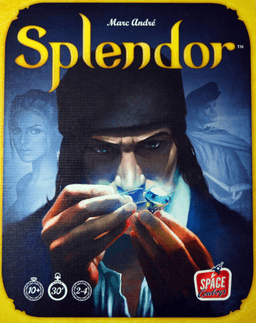
Splendor
Renaissance merchants race to grab gems, acquire property, and please nobility
Two games can share a similar weight rating and feel extremely different at the table. One player might struggle with a game that presents a wide decision space every single turn, even if the rules themselves are light. Another might happily engage with a rules-dense worker placement game precisely because the choices are narrow, structured, and predictable once learned. Complexity collapses all of this into a single axis — and in doing so, it hides more than it reveals.
Let’s take video games for example. The ‘Soulsborne’ genre, with games such as Bloodborne, Elden Ring and Dark Souls has gravitated players who enjoy this hard, crushing and difficult-to-master action game. These are notoriously difficult games, however that same player who is at ease with these — may find high energy shooters — such as Overwatch or Call of Duty mentally taxing. Neither preference says how “serious” a player is. It reflects what kind of mental effort they enjoy. There isn’t this same single axis for difficulty that seems to exist for board games. By treating complexity as a single upward slope, we miss how differently people experience challenge at the table.
There was an interesting article explaining “A Better Rating System For Board Games” which supports these spider graphs broken in to what makes a game complex. They are broken down in to “time/effort/dedication to learn how to play a game, and the amount of strategy, decision making, and unique ways a game could unfold once you started playing”. A decision space for one player could be a fundamental barrier for getting a player to play these board games in comparison to someone who with a narrow choice selection can understand and enjoy a meticulous and difficult to master worker placement game. How can we open this up and get a better understanding of what we or our friends enjoy then?
This is a chance for board game criticism and reviewers to do better. Rather than just explaining rules and telling us how they fit the narrative of a game. How mechanics and weight, affect the complexity and slip in to this generalised fashion of ‘oh you enjoyed X therefore you will find Y easy’. Take the time to understand whether a game will match a players personality, temperament, preferences and tolerance for decision making. Ask the right questions and stop thinking of complexity as being a gatekeeper but of being what it was always meant to be; a small part of a much richer picture.