How to Get Bigger Strategic Board Games to the Table?
Every board gamer has the shelf trophy that never gets played.
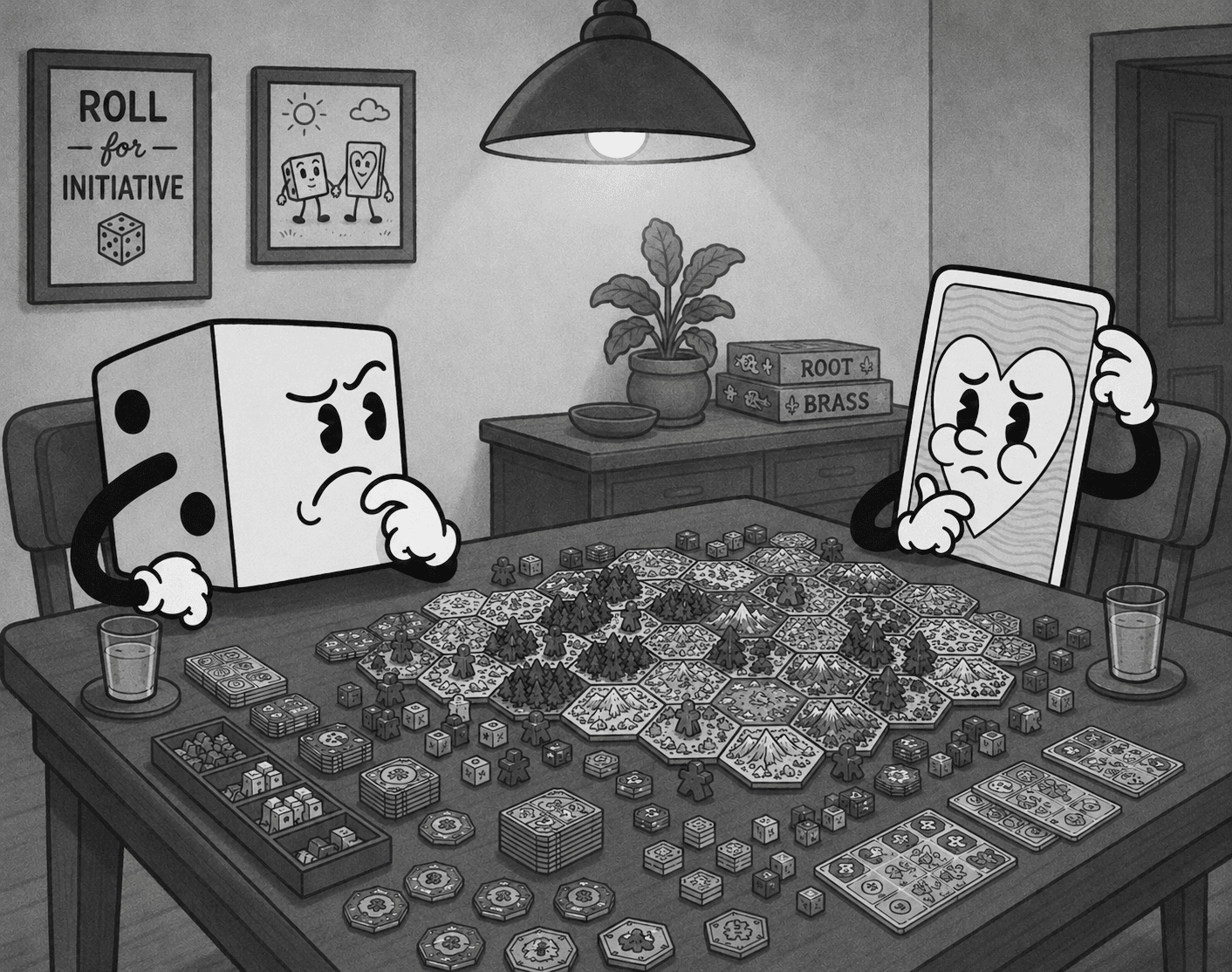
On your shelf is a giant box sitting and staring at you, disappointed. Maybe it’s Twilight Imperium. Maybe it’s Voidfall. Maybe it’s Frosthaven. Whatever it is, you bought it with genuine optimism and have since played it exactly once. Or worse, punched the tokens and called it a day.
The reality is that bigger strategic games come with bigger barriers. They demand time, energy, commitment, and usually one friend who enjoys reading rulebooks.
But getting these games to the table consistently is possible. You need to remove the friction that stops people from saying yes.
Problem 1: Long Set-Ups
Nothing kills excitement faster than opening a massive game box and spending 40 minutes sorting bags of tokens while everyone else slowly checks out mentally.
The biggest upgrade you can make to heavy games isn’t an expansion. It’s inserts.
Companies like Folded Space make inserts specifically designed to speed up setup and teardown. Instead of opening fifteen plastic bags, everything has a place and usually goes straight onto the table.
If you’ve got a friend with a 3D printer, even better. The board gaming community has created thousands of custom inserts, trays, card holders, and organisers online. Some of them are honestly more engineered than actual furniture.
The other simple trick is preparation.
If your group is intimidated by big games, don’t let the first thing they see be chaos. Set the game up before people arrive. When they walk in, and the board is ready to go, the game suddenly feels accessible instead of exhausting.
That psychological barrier matters more than people realise.
Problem 2: Lengthy Rules Explanations
Heavy games often die before the first turn because the teach turns into a 90-minute lecture nobody remembers.
The best solution is to stop treating the rules explanation like a university seminar.
Ask people to watch a rules video before game night. They don’t even need to absorb everything perfectly. Watching it in chunks throughout the week helps massively because players arrive with some context already in place.
There are brilliant creators now making concise and approachable tutorials, and most players would rather watch a 20-minute video on their sofa than sit through a live explanation while pretending they understand what you've just said.
Once the game starts, try a rolling teach instead.
Teach the basics first:
What’s the objective?
What can you do on your turn?
How does the game generally flow?
Then explain the finer details as they appear naturally during play.
Most importantly, reassure everyone that the first game doesn’t count.
That changes the atmosphere immediately. People stop worrying about making mistakes and start experimenting instead. Heavy games become much more enjoyable when players aren’t terrified of ruining their chances in round one because they misunderstood a symbol on a cardboard hex tile designed by a man named Klaus.
If the group enjoys it, run it back sooner rather than later. The second game is usually where the real experience begins anyway. Suddenly, people understand the strategy, the pacing improves, and the competitive side starts to come alive.
That’s when the bragging rights matter.
Problem 3: Board Game Fatigue
Trying to bring out a four-hour strategy game at 9 pm after everyone has already played three lighter games is usually a terrible idea.
People are mentally cooked by that point.
Heavy games need energy and attention. They don’t work well as a “one more thing before we finish” experience.
The same goes for weekday gaming after work. Most people don’t want to spend Tuesday evening calculating economic efficiency after surviving meetings, traffic, emails, and whatever other nonsense was thrown at them.
Instead, plan around the game properly.
Arrange a dedicated board game day at the weekend and start with the big game first while everyone is fresh and engaged. Make it the main event instead of the optional extra.
Ironically, big games become easier to organise once you stop trying to squeeze them in casually.
What If None of This Works?
Sometimes the honest answer is that your current group just isn’t interested in heavier strategic games.
And that’s completely fine.
Not every player enjoys long-form strategy. Some people genuinely want lighter, social experiences. Nothing wrong with that.
But it doesn’t mean you can’t find players who do want what you want.
Board game cafés are one of the best places to start. Many have Facebook groups, Discord servers, or community pages where players organise sessions and look for extra people to join games.
Some cafés even let you schedule community events yourself. If there’s a game you’ve been desperate to try, ask whether they’d advertise a session on their events page.
There’s also been a noticeable rise in local gaming nights hosted in pubs, cafés, and community spaces. A quick search on Facebook or Google will usually uncover groups nearby.
And honestly, there are far more people looking for someone to finally play that intimidating big-box game with than you probably realise.
Most of them are sitting at home staring at the same shelf you are.
Final Thoughts
Big strategic board games ask for more from players. More time, more patience, more effort. But they also tend to create the stories people remember most afterwards.
Nobody talks for years about the perfectly adequate filler game they played on a random Wednesday night. They remember the six-hour war that came down to a final turn, alliance betrayal. They remember the impossible comeback. They remember the table erupting because someone misunderstood one rule three hours earlier and accidentally changed the course of history.
The key is removing as much friction as possible before the game even begins. Make the setup easier. Make learning less intimidating. Pick the right time and setting. And if your current group isn’t interested, find people who are. Because those big games belong on the table not just in your collection.